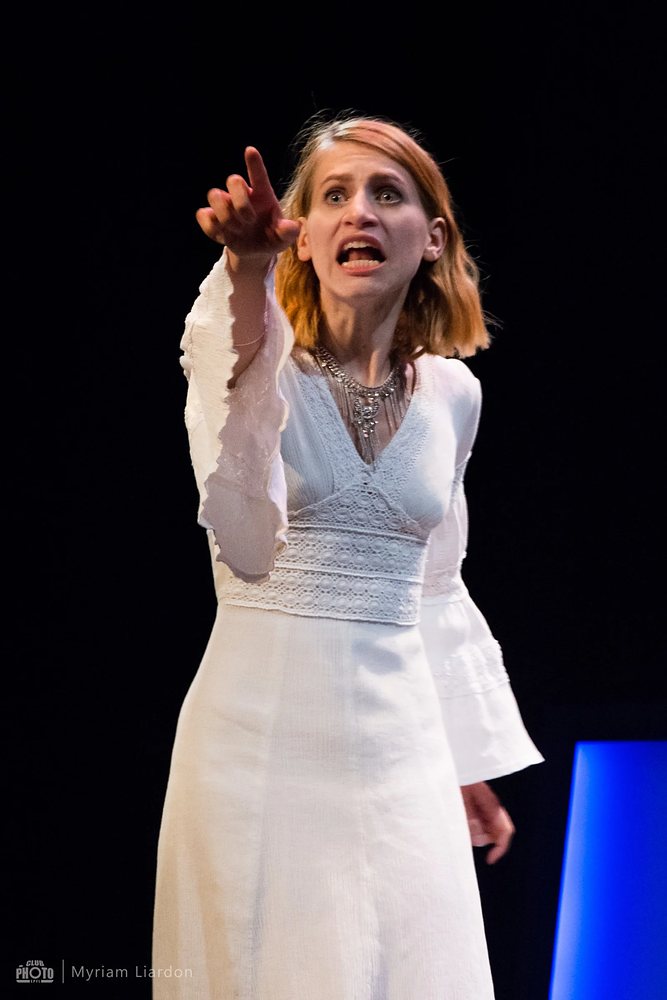
Greek hero, king of Mycenae, commander of the Achaean army and conqueror of Troy – after 10 years of war, the Man of these glorious epithets returns to his palace! A homecoming that must be celebrated in style! His faithful wife, Klytaimnestra, personally oversees the preparations, and the dark omens of the mysterious Kassandra will change nothing. Music, dances, sacrifices… a great celebration is on the way!
A new, previously unpublished translation of Aeschylus's Agamemnon, produced during the creative process with the support of professors and students of Classics at the University of Lausanne. Worked out on stage, the adaptation places the meaning of the words squarely at the heart of the theatre, and not merely through Greek philology. Such a translation makes it possible to emphasise the essential aspect of this work – language.
The two protagonists, Klitajmestra and Kassandra, represent two opposing forms of language. Klitajmestra speaks loudly and with assurance; everyone listens to her, but what she declares is false and will not come to pass. Her words and deeds will bring about the destruction of her own future and that of her family. On the other side, Kassandra, misunderstood by all and cursed by Apollo, cannot express herself properly and no one listens to her. Yet she alone knows the future precisely and could prevent the misfortunes.
This opposition lies at the heart of the show, highlighted and accentuated through a contemporary, theatrical translation, which seeks to present an adaptation of the Agamemnon through certain themes, accentuated by the translation