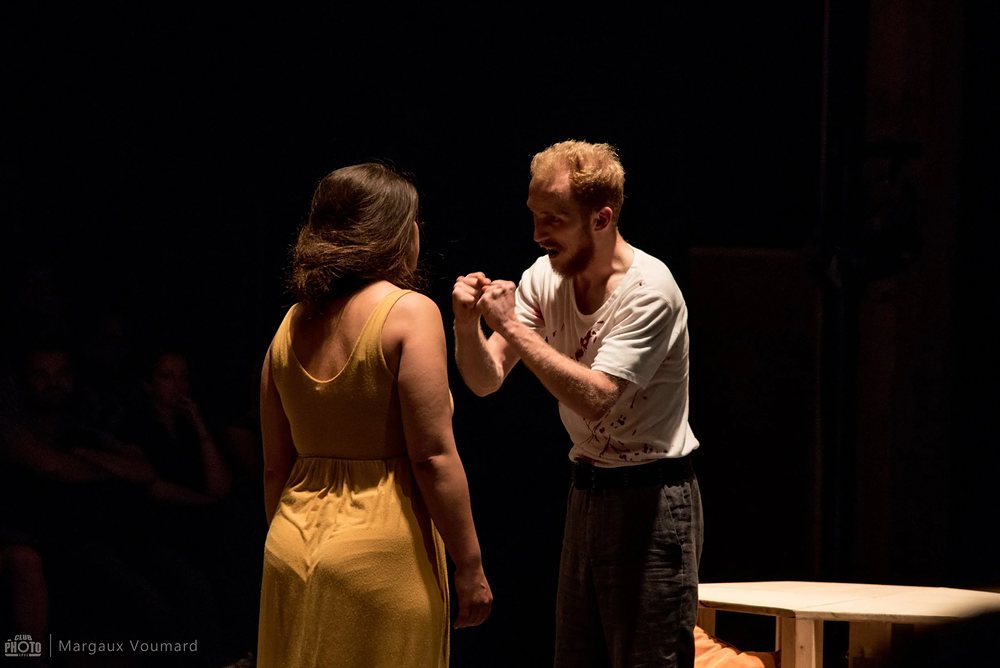
How did we get here? Camille has just been murdered by her brother, as he returned triumphant from the civil war between Rome and Alba. Victorious and at the height of its glory, Rome sees its hero sink into the depths of shame. Family, homeland, principles and ethics all collide. For the king, it is now a matter of judgement: should the fratricide be absolved, or the hero condemned?
Adapted from Corneille's Horace, Le Procès d’Horace sets out to explore this well-known classic, so rarely seen on contemporary stages. What is the point of staging the classics again? This question, central to theatre-making today, guides the project of Cie Acte V, which here sets out to revisit Pierre Corneille's masterpiece. Why, despite such promising ingredients (crime, fratricide, judgement, absolution), is the play so seldom performed? What makes it distant, difficult to grasp? Is it the patriotism, the ideal of conquest, or the sexism? Or is it its structure, its length?
Le Procès d’Horace, a creative rereading of Corneille's play, seeks to overcome the problems of a classical text's reception by a contemporary audience. By exacerbating the play's "flaws" as Corneille himself had already perceived them, Cie Acte V presents a more-than-topical version: a drama of human contradiction in which questions of gender, ethics and power are brought to the fore.
“This crime, though great, enormous, inexcusable, / Comes from the selfsame sword and from the selfsame arm / That makes me master of two States today.”Horace, acte V, scène 3