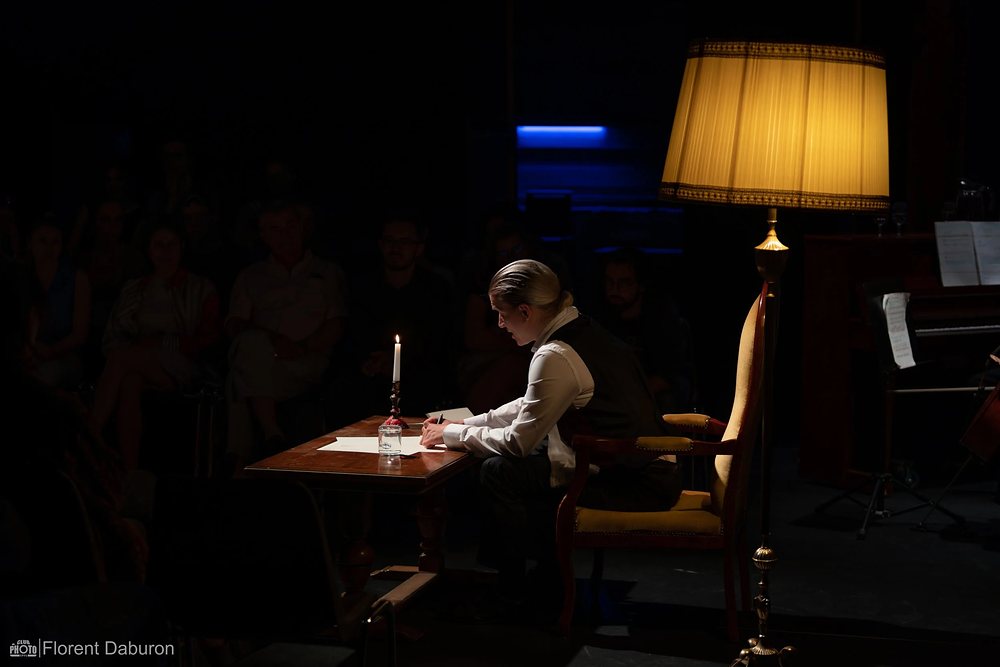
Inconnu à cette adresse (Address Unknown) is the best-known work by the American writer Kathrine Kressmann Taylor. A poignant, powerful and original piece, the play is an exchange of letters between a Jewish art dealer living in San Francisco and his business partner, who has been obliged to return to Germany in 1932 and gradually succumbs to the siren song of Nazism. The cordial exchange evolves into a subtle and moving confrontation, sustained by remarkable suspense.
The text was written in 1938, but the action takes place between 12 November 1932 and 3 March 1934. This is a key moment in German history, which saw Hitler rise to the office of chancellor, a quasi-messianic figure for many. Kressmann Taylor ends her story shortly before the death of Field Marshal Hindenburg and the Night of the Long Knives, the Nazi regime's first mass killing. The period of the story is thus that of Germany's resurrection against a backdrop of antisemitism. Humiliated at the time of the armistice, the country was preparing to emerge from the Weimar episode after suffering unemployment, inflation and the burden of war reparations. The hopes the German nation placed in the new chancellor are understandable at this point in history, and Kressmann Taylor's subtle narrative refuses the Manichaean analysis into which any theatrical production should take care not to fall.
The set design brings actors and audience into close proximity, with spectators seated on two sides facing each other on either side of the actors. The text is given room to breathe through brief interludes for cello and piano, played live. They form an original score composed especially for Inconnu à cette adresse by the French composer Isabelle Aboulker.